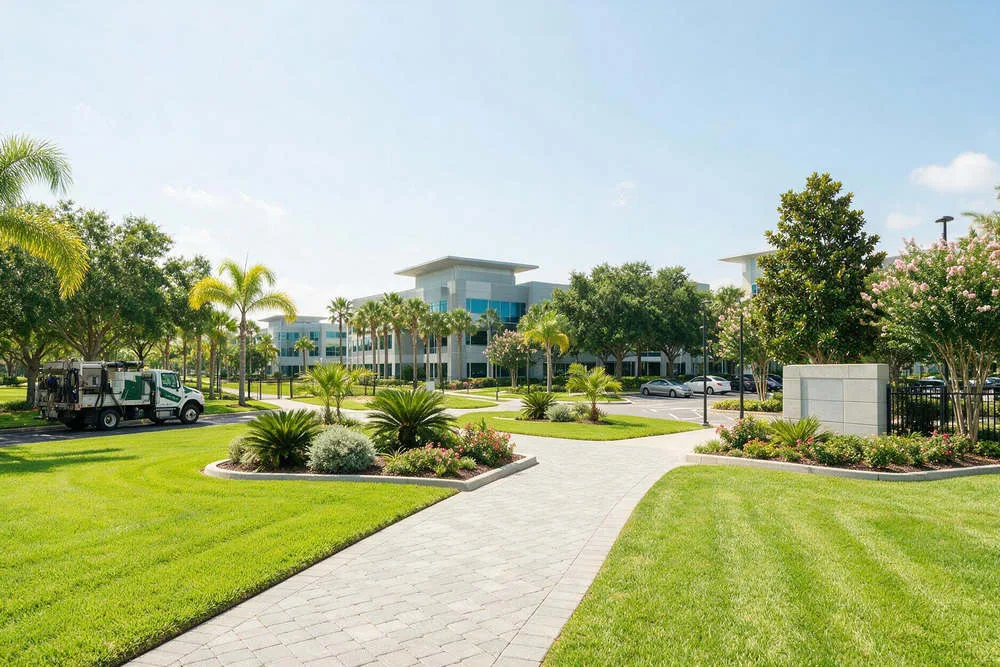
Commercial landscape maintenance in Central Florida typically runs higher than national averages because of the near-year-round growing season, hurricane preparation requirements, and the irrigation demands of Florida's climate. For a mid-size business property, full-service contracts generally range from several hundred to several thousand dollars per month depending on acreage, service scope, and site complexity. If you are building a 2026 budget, those numbers need context before they mean anything. Plant This! works with property managers across the region on contracts sized to the actual scope of each site. Request a tailored commercial landscaping quote or call (407) 676-4806 to get a number that reflects your property specifically.
What drives the price on a commercial property
The single biggest variable is acreage, but it is rarely the only one. A three-acre office park in the Dr. Phillips corridor with mature canopy trees, an irrigation system, and seasonal color beds costs considerably more to maintain than a three-acre property with turf and minimal plantings. Service frequency matters too. Central Florida's subtropical climate means turf grows almost every month of the year, so a property that needs weekly mowing in June also needs it in October. That compressed calendar is one reason full-service contracts in the Southeast run above the national range compared to markets where the season pauses in winter.
Tree work is often treated as a separate line item, and that decision has budget consequences. A Lake Mary corporate campus with thirty or forty mature oaks on the property will spend meaningfully more on annual structural pruning and arborist evaluations than a property with ornamental plantings only. Bundling commercial landscape maintenance with regular tree care into one contract tends to cost less per service than calling a separate crew each time, and it also means one point of contact for documentation, which matters when a liability question comes up after a storm.
Irrigation and fertilization scope round out the primary cost drivers. Properties near the Maitland area with older irrigation infrastructure often carry higher water bills and higher repair frequency than sites with modern zone-controlled systems. Fertilization in Florida is also not optional for most commercial plantings; the soil profile here does not retain nutrients the way Northern soils do, and skipping fertilization cycles shows up quickly in plant health and replacement costs.
Why the lowest bid often costs the most
A low bid almost always reflects a narrower scope. It either excludes tree care, fertilization, and irrigation management, or it prices those services at a level that produces reactive rather than preventive work. The math on deferred maintenance is straightforward: replacing dead palms, repairing irrigation heads that failed because no one checked them, or paying emergency rates for storm debris removal after a contractor missed a pre-season pruning window all cost more than the monthly savings on a cheaper contract ever recovered.
There is also a liability dimension that tends to be underweighted in initial budget conversations. A slip-and-fall on an unmaintained walkway edge, or a vehicle claim from a falling limb that should have been removed six months earlier, carries costs that dwarf a year of maintenance fees. Documented, consistent service from a qualified contractor is evidence of reasonable care. A low-cost vendor with spotty visit records provides very little of that protection.
Designing for lower long-term costs
One of the highest-leverage decisions a property owner can make is investing in commercial design planting that reduces ongoing maintenance demands. Native and Florida-adapted species require less irrigation, tolerate the summer wet season without drainage issues, and need less corrective pruning over time. A well-designed planting plan also reduces the labor hours required per visit, which compounds over a multi-year contract.
Specific choices that reduce long-term cost:
- Low-growing ground covers in high-maintenance border areas instead of turf that requires weekly edging.
- Florida native shrubs with predictable growth habits that do not need monthly shaping to stay within bounds.
- Canopy trees selected for their wind resistance and structural integrity, reducing storm-response costs over time.
- Mulched beds over irrigated turf in shaded areas where turf rarely performs well anyway.
What to include in a realistic 2026 budget
A complete commercial landscape budget for a Central Florida property should account for four categories: routine maintenance visits (mowing, edging, blowing, bed maintenance), tree care (annual arborist evaluation, structural pruning, and a reserve for emergency removal), irrigation (quarterly inspection, repairs, and seasonal adjustments), and fertilization (typically four to six applications annually depending on plant material). Leaving any of these out does not reduce the cost; it just moves it from the planned column to the emergency column, usually at a higher rate.
The 2026 trend for Southeast full-service contracts also reflects increased pricing for storm-response availability. Vendors who guarantee priority response after a named storm event charge for that commitment upfront. That cost is worth evaluating before a storm, not after.
If you are putting together a commercial landscape budget for 2026 and want a quote built around your property's actual footprint and service needs, Plant This! is ready to walk the site and build that number with you. Call (407) 676-4806 or request your tailored commercial landscaping quote today.