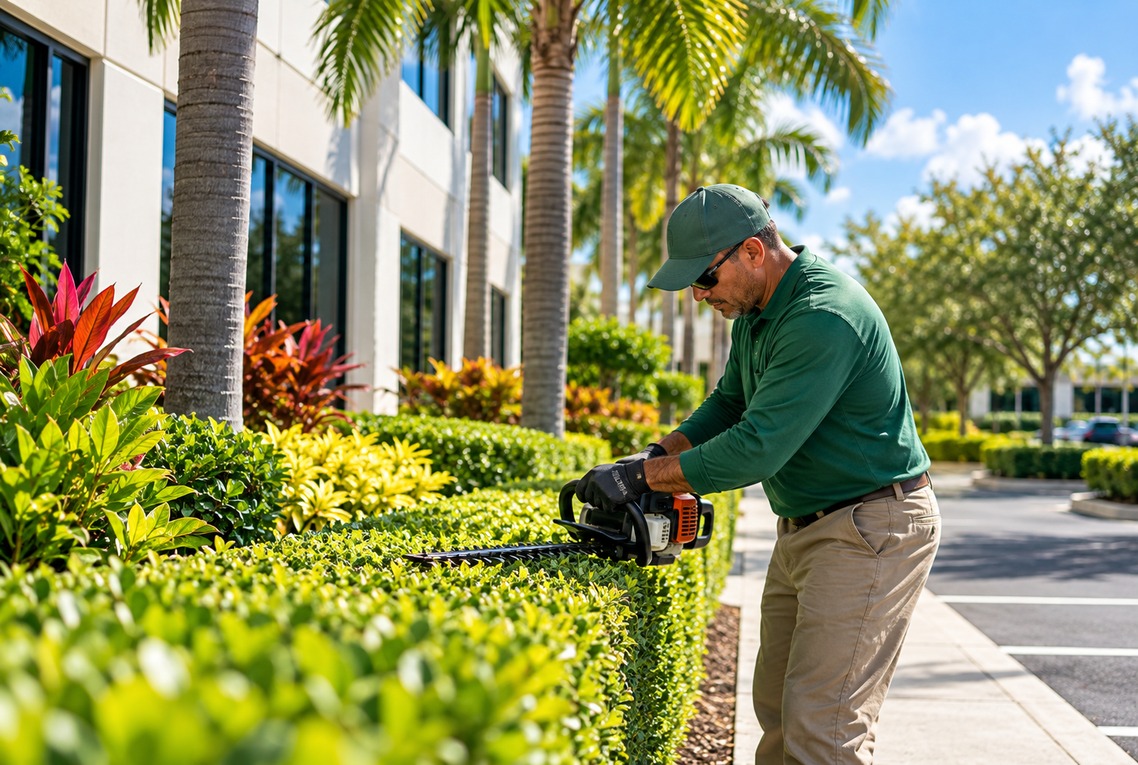
Most Orlando commercial properties need weekly commercial landscaping service from about April through October, then every other week through the cooler months. Detail work like edging, weeding, and shrub trimming should ride along on those visits, not wait for a quarterly cleanup. High-traffic retail and hospitality sites often need more than that. At Plant This!, we build schedules around how your site actually grows, not around a one-size contract.
If you're reviewing vendors or your current schedule isn't keeping up, contact our commercial team or call (407) 676-4806 and we'll walk the property with you.
Why does Orlando's growing season change how often commercial grounds need service?
Because Central Florida turf and shrubs grow hardest during the summer rainy season, and a schedule built for a northern climate falls behind fast. Weekly visits in summer are the baseline for most sites, not an upgrade.
Once the afternoon storms settle in around June, St. Augustine and Bahia can put on enough growth in seven days that a skipped week shows. Mow too much off at once to catch up and you scalp the turf, which opens the door to weeds and chinch bug damage. Hedges of viburnum and ligustrum push new growth just as quickly, so a building that looked crisp on Monday can look shaggy by the following Friday. The pace slows from roughly December through February, when turf growth drops and most sites can move to biweekly mowing with a monthly detail pass. You can see the difference on International Drive. Hotels and restaurants there keep crews on site weekly or more through the summer because their guests notice a ragged median or overgrown entry bed immediately. Your tenants and prospects notice the same things, even on a quieter office property. The schedule should flex with the season rather than stay flat all year.
How do you match commercial landscaping service intervals to your property type and budget?
Start with how visible the property is and who uses it. Customer-facing sites need more frequent detail work, while back-of-house or low-traffic areas can run on a lighter rotation.
A retail center with anchor tenants usually needs weekly mowing, plus litter pickup and bed checks before opening hours. A single-tenant office building can often get by with weekly mowing in summer and a biweekly detail rotation. Industrial and warehouse sites tend to put budget into retention ponds, fence lines, and truck-court edges instead of flower beds. HOAs and multifamily communities sit in the middle, since residents see the grounds every day. Office parks like Maitland Center are a good example of mixed needs on one campus: the entry signage and building fronts carry the image, while the rear lots and pond banks can run on a longer cycle. A smart commercial landscape maintenance plan zones the property that way, so you spend where people are looking and trim cost where they aren't. That's usually cheaper than paying for the same service level on every square foot, and it's a question worth asking any vendor you're vetting.
What does under-servicing really cost a commercial property?
It costs curb appeal first, and liability close behind. Overgrown shrubs block sightlines at drive entrances, weeds hide trip hazards along sidewalks, and a tired entry tells visitors the building is poorly managed.
Corporate and medical campuses around Lake Nona hold a high standard for a reason: patients, recruits, and executives form an impression before they reach the front door. We saw what happens when that standard slips. A property manager called us after the company's vice president found weeds growing up to his waist next to the monument sign. The next day, they were scheduled to host important clients visiting from out of state. That's a hard way to find out your schedule has gaps. That episode pushed them to adopt a better maintenance routine, one where the sign, entry beds, and parking islands got checked every visit instead of when someone complained. Under-servicing rarely shows up as one big failure. It creeps in a few missed details at a time, until the monument sign, the first thing anyone sees, is the part nobody has touched in weeks.
What should a tailored maintenance and fertilization plan include?
A good plan spells out visit frequency by season, what gets done on every visit, and when turf and shrubs are fed and treated. If a proposal just says "weekly service," ask for the details.
At minimum, expect mowing, string trimming, hard-edge and bed-edge work, blowing off walks and lots, weed control in beds, and shrub pruning on a set rotation. Irrigation checks matter in Orlando too, since a broken head can flood one zone and starve the next during a dry spring. The feeding side deserves its own line. Commercial fertilization should be timed to the turf type and to local rules, because several Central Florida jurisdictions limit nitrogen and phosphorus applications during the summer rainy season. Florida also requires commercial fertilizer applicators to hold a state certification, so it's fair to ask a vendor to show theirs. Add seasonal items like mulch refreshes, annual color changes at entries, and storm cleanup before and after hurricane season. When all of that sits in one written plan, you can hold your crew accountable and budget without surprises.
Your property should look ready for visitors every day, not just the day after a cleanup. Call Plant This! at (407) 676-4806 or request a maintenance plan for your property, and we'll put together a schedule that fits your site and your budget.