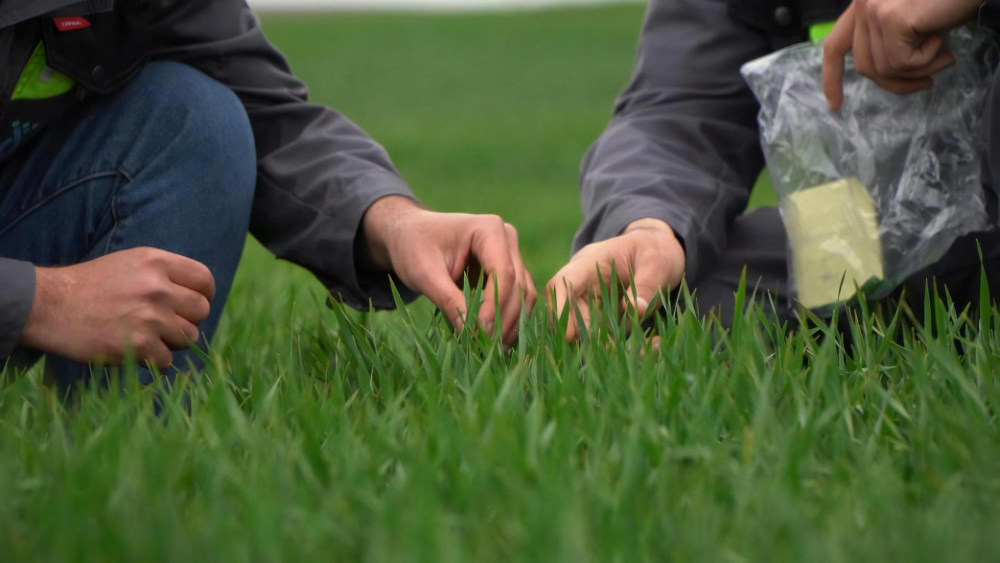
Keeping a commercial lawn green in Central Florida isn't just about aesthetics; it's about protecting your investment and maintaining property value. In Lake Mary, where summer temperatures regularly top 90°F with 80% humidity, sod faces intense stress that can turn a lush entrance into a brown patchwork in weeks.
For commercial property managers, the challenge is balancing curb appeal with budget. A healthy lawn signals professionalism to tenants and customers, while a struggling one suggests neglect. This guide covers specific maintenance protocols to keep your commercial landscape thriving in our unique climate.
Choosing the Right Sod for Commercial Properties
Selecting the correct sod type is the first step in successful commercial landscaping in Lake Mary, Florida. The wrong grass variety will struggle against pests, shade, or foot traffic, driving up maintenance costs significantly.
St. Augustine (Floratam): This is the most common choice for commercial properties in Lake Mary. It has broad, coarse blades and excellent heat tolerance. However, it requires full sun and is susceptible to chinch bugs. If your property has large, open, sunny areas, this is likely your best bet.
Zoysia (Empire): Zoysia is gaining popularity for its lush, carpet-like appearance and better drought tolerance compared to St. Augustine. It handles foot traffic well and recovers quickly from wear, making it ideal for common areas where employees or visitors might walk. It costs about 10-15% more upfront but can save on water bills over time.
Bahia: For large, low-maintenance areas like retention ponds or roadway medians, Bahia is the practical choice. It’s not as visually refined as St. Augustine or Zoysia, but it’s tough, drought-resistant, and requires less fertilizer.
When planning commercial design planting, always assess the sunlight and irrigation capabilities of each specific zone on your property before laying sod.
Commercial Watering Techniques
In Central Florida, proper irrigation makes the difference between a resilient lawn and one that invites disease. Overwatering is just as dangerous as underwatering, promoting fungus like Large Patch and root rot.
The 3/4 Inch Rule: Your commercial sod needs about 3/4 of an inch of water per session. During the active growing season (March through October), water 2-3 times per week. In the dormant winter months (November through February), reduce this to once a week or as needed.
Timing Matters: Schedule irrigation systems to run in the early morning hours, ideally between 4:00 AM and 8:00 AM. This minimizes evaporation from the sun and wind, ensuring water reaches the roots. Avoid evening watering, which leaves grass blades wet overnight and creates a breeding ground for fungal diseases.
Audit Your System: Commercial systems often have broken heads or misaligned sprays that waste water. A monthly wet check can identify zones that are too dry or soggy. We often see properties in Heathrow or near Timacuan Golf Club where overspray hits pavement, wasting gallons of water and staining concrete.
Fertilization Schedules for Commercial Sites
Commercial lawns have different nutritional needs than residential ones due to higher traffic and aesthetic standards. A strict commercial fertilization schedule ensures steady growth without encouraging pests.
Blackout Periods: Be aware of local fertilizer ordinances. In Seminole County, applying nitrogen or phosphorus fertilizer is restricted during the summer rainy season (June 1 through September 30) to protect local waterways.
Slow-Release is Key: Use a granular fertilizer with at least 50% slow-release nitrogen. This feeds the turf gradually over 60-90 days, preventing the rapid surge in growth that attracts pests.
Micro-Nutrients: Florida's sandy soil often lacks iron and magnesium. If your St. Augustine grass looks yellow but is growing, it might be an iron deficiency, not a lack of nitrogen. Applying a liquid iron supplement can restore the deep green color without violating summer blackout rules.
Weed and Pest Control Strategies
In our subtropical climate, weeds and pests are year-round threats. Commercial properties cannot afford the liability or unsightly appearance of fire ant mounds or chinch bug damage.
Chinch Bugs: These are the number one killer of St. Augustine grass in Lake Mary. They thrive in hot, dry spots, often near sidewalks or parking lots where heat radiates from the concrete. Inspect yellowing patches by parting the grass; if you see tiny black bugs, treat the area immediately.
Sod Webworms: These pests eat the grass blades, leaving a ragged look. You might notice moths flying up from the grass as you walk. Treatment is straightforward but must be timed correctly to catch the larvae.
Weed Prevention: Pre-emergent herbicides are your best defense. Apply them in early spring (February/March) and early fall (October) to stop weed seeds from germinating. This is far more cost-effective than trying to kill mature weeds later. A typical commercial application costs between $80 and $150 per acre, depending on the product used.
Mowing Practices for Commercial Lawns
Mowing height directly impacts root depth. The deeper the roots, the more drought-resistant the sod becomes.
St. Augustine: Mow high, between 3.5 to 4 inches. Cutting it too short stresses the grass and exposes the soil to sunlight, which encourages weed growth.
Zoysia: Can be mowed slightly lower, around 2 to 2.5 inches.
Blade Sharpness: Commercial mowers cover a lot of ground. Blades should be sharpened weekly. Dull blades tear the grass rather than cutting it cleanly. These jagged tears turn brown and create entry points for disease.
Frequency: During summer, weekly mowing is mandatory. In winter, biweekly service usually suffices. Never remove more than one-third of the leaf blade in a single cut.
Aeration and Dethatching
Over time, soil compaction and thatch buildup can choke your sod.
Aeration: This involves pulling plugs of soil out of the ground to allow air, water, and nutrients to reach the roots. For commercial properties with high foot traffic, aeration should be done once a year, typically in late spring.
Dethatching: Thatch is a layer of dead organic matter that sits between the green grass and the soil surface. If it exceeds 1/2 inch, it blocks water and harbors pests. Vertical mowing (verticutting) removes this layer. This is an aggressive process that should only be done when the grass is actively growing and can recover quickly.
Seasonal Care Tips for Lake Mary
Spring (March-May): This is the prime growing season. Focus on weed control and applying your first round of fertilizer. Check irrigation systems as temperatures rise.
Summer (June-September): Maintenance is at its peak. Mow weekly, monitor for chinch bugs daily, and adhere to fertilizer bans. Watch for fungus during periods of heavy rain.
Fall (October-November): Apply pre-emergent herbicides and a winterizer fertilizer with high potassium to strengthen roots for the cooler months. Reduce watering frequency.
Winter (December-February): Growth slows. Mow biweekly and monitor for winter weeds like Poa Annua. Water only when signs of wilt appear (folded leaves).
The Bottom Line on Sod Maintenance
Maintaining commercial sod in Florida requires proactive management, not reactive fixes. By the time you see brown patches, the damage is often done, and repair costs triple. Whether you manage a retail center on International Parkway or an office complex near Lake Mary Blvd, consistent care is the only way to protect your landscape assets.
If your current maintenance plan isn't delivering results, or you need an assessment of your commercial property, we can help. Our team specializes in commercial landscaping in Lake Mary, Florida, and understands the specific needs of our local soil and climate. Contact Plant This! at (407) 676-4806 to schedule a site walk today.